Why Movie Theaters Care So Much About Popcorn
You walk into a movie theater to watch a movie.
The theater immediately tries to sell you popcorn.
Then soda.
Then candy.
Then a bigger popcorn.
Then a bigger soda.
It can feel like an expensive snack shop that happens to have a cinema attached.
Economically, that's not entirely ridiculous.
The ticket isn't all theirs
When a theater sells you a movie ticket, it doesn't simply keep the entire price.
The theater licenses films from distributors, and film exhibition costs are generally tied to box-office receipts.
AMC reported that film exhibition costs consumed 48.1% of its admissions revenue in 2025 across its business. In its U.S. segment, the figure was 51.2%.
Now look at food.
AMC generated about $1.67 billion in food-and-beverage revenue in 2025.
Its food-and-beverage costs were about 19.6% of that revenue.
Those aren't pure profit-margin figures—running a theater has plenty of other expenses such as labor, rent, utilities and corporate costs.
But they reveal something important.
The direct economics of selling you food can be very different from the direct economics of showing you a movie.
The blockbuster brings you in
Imagine you're running a theater.
You need the movie.
Without the movie, nobody comes.
But a significant share of the ticket revenue is associated with film exhibition costs.
Once the customer is inside, however, you can sell something else.
Popcorn.
Soda.
Candy.
Nachos.
And unlike the latest Hollywood blockbuster, the popcorn isn't being licensed from a movie studio in exchange for a large share of the box-office proceeds.
That's why concession spending matters so much.
AMC's U.S. customers spent an average $8.57 per patron on food and beverages in 2025, up from $8.30 the previous year.
Think about that.
Not every person buys food.
Yet averaged across everyone attending, food-and-beverage revenue per patron was more than eight dollars.
Popcorn isn't an accessory
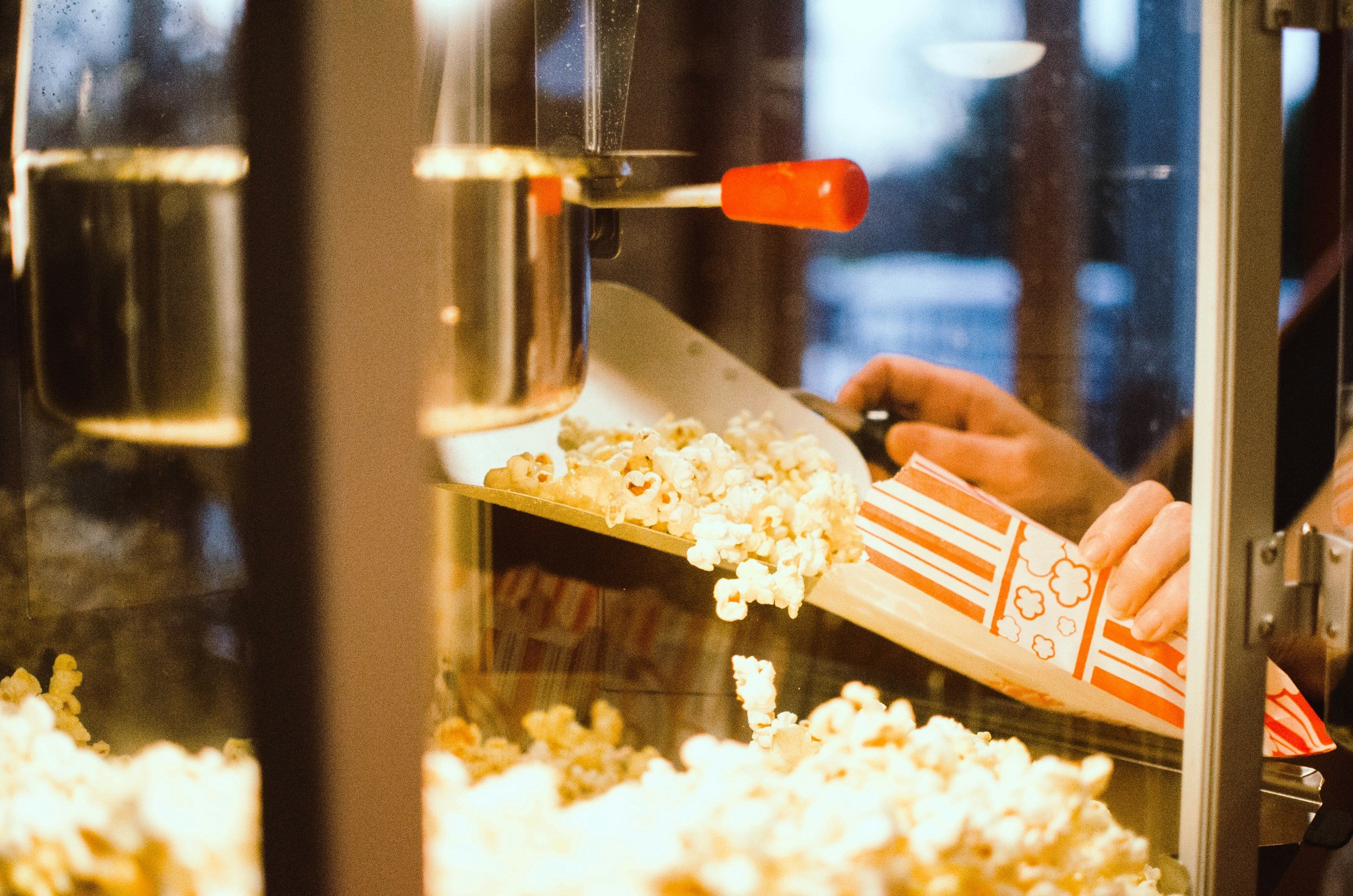
This also explains why theaters devote so much space and attention to concessions.
The giant menu boards.
The collectible buckets.
The enormous drinks.
The smell of popcorn before you've even shown your ticket.
The movie is the reason you came.
But the theater's business is built around extracting revenue from the entire visit.
AMC itself describes admissions and food-and-beverage sales as its two primary sources of theatrical exhibition revenue.
Which means the $10 bucket of popcorn isn't just something to eat while watching the business.
It's part of the business.
Published: September 28, 2026
Sources: AMC Sec Filling